


Council Action Committed to Reducing District’s Carbon Footprint
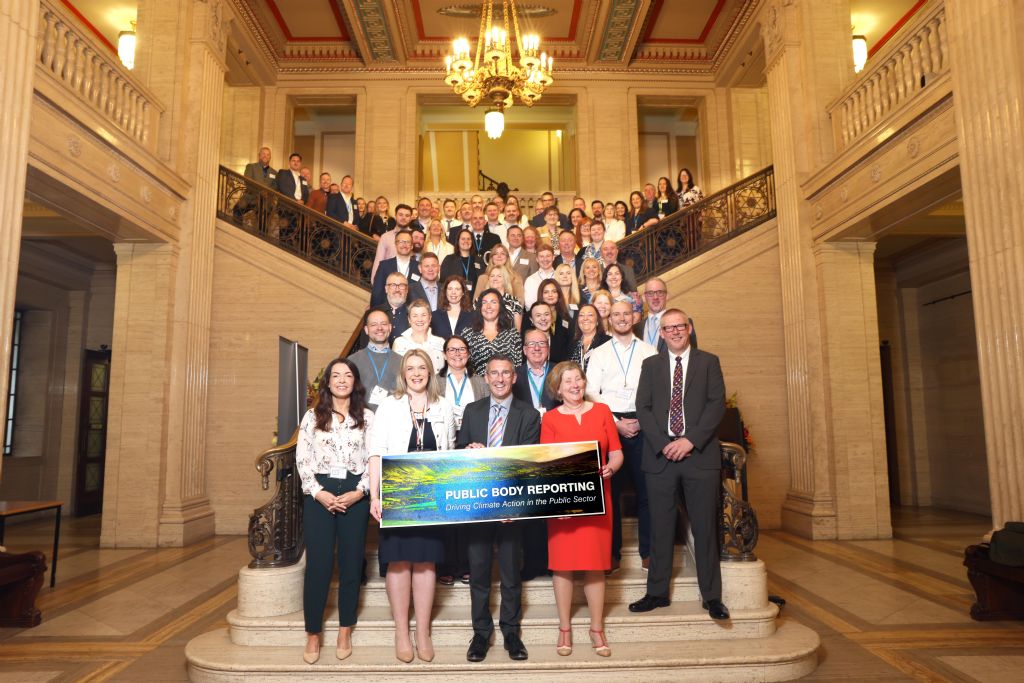
Newry, Mourne and Down District Council was one of a number of public bodies represented at a Stormont event to mark the end of the first year of new Climate Change reporting legislation.
The Department of Environment, Agriculture and Rural Affairs (DAERA) which hosted the event, requires public bodies to report on their respective Climate Change actions and carbon footprint data, in relation to mitigation and adaption measures.
Newry, Mourne and Down District Council representatives were joined by their colleagues from all Northern Ireland councils and those representing education, health, emergency services and other key public service providers.
Under the Regulations, the public bodies are required to submit climate change reports to DAERA outlining their greenhouse gas emissions, mitigation actions to reduce emissions, climate risks and what they are doing to adapt to the impacts of climate change.
All 40 bodies, including Newry, Mourne and Down District Council, met their statutory reporting obligations, with two additional organisations participating on a voluntary basis.
The first reporting cycles have generated a comprehensive evidence base on emissions data, climate risks and actions across the wider public sector in Northern Ireland creating a clear baseline for ongoing improvement. Benefits are already evident, as organisations strengthen sustainability practices and integrate climate considerations into planning and operations with some bodies noting the energy savings they are already seeing.
The Stormont event recognised the progress made in strengthening climate governance, knowledge and action across Northern Ireland’s public sector, and its contribution to the wider climate agenda. Attendees heard directly from public bodies about their experiences, successes and key learnings from the first reporting cycle and reflected on the next steps to build on this strong foundation in future reporting cycles.
DAERA is reviewing the submitted reports and will publish a summary of key findings alongside the full mitigation and adaptation reports in due course, with the insights gathered supporting and informing future policy development and strengthening Northern Ireland’s response to climate change.
DAERA Minister, Andrew Muir said, “The public sector has a crucial leadership role in responding to climate change, both within its own operations and in supporting the wider transition to a net zero, climate-resilient Northern Ireland.
“The work undertaken through these reporting cycles has created a strong foundation for future progress and is already helping to embed climate considerations into organisational decision-making and planning. The high level of engagement and collaboration across public bodies and with DAERA, demonstrates a strong and shared commitment to driving meaningful climate action.”
Councillor Mickey Ruane, Chairperson of Newry, Mourne and Down District Council’s Sustainability and Environment Committee said, “We are committed to guiding our district towards achieving net zero status by 2050 and our draft Sustainability and Climate Change Strategy highlights areas for action to help the district address the challenges it faces.
“At the heart of the strategy is achieving a net zero, greener, healthier and sustainable district where people, communities and businesses thrive and are resilient to the impacts of climate change. The blueprint is a key element in helping us prepare for a changing climate and how we respond to reduce emissions.”
Cllr Ruane said he is delighted the Council is meeting its statutory climate change reporting obligations required by DAERA and paid tribute to the staff and officers involved in collating and providing the information.
Newry, Mourne and Down District Council aims to work in partnership with others to take positive action to reduce emissions and impacts on climate change to ensure the district becomes a resilient and thriving zero carbon district and region.
It aims to fully decarbonise its entire vehicle fleet and increase recycling rates, with a focus on energy efficiency, investment in renewables and promoting and developing active travel. There are also plans to align climate action and other key strategies including the Council’s biodiversity and tourism strategies, Area of Outstanding Natural Beauty management plans and 10-year masterplan for the UNESCO Global Geopark.
There are also proposals to engage with the community, businesses and schools to encourage climate action, provide strategic leadership on climate action across the district and cross-border co-operation with Louth County Council to develop a net zero region.