


Public asked for view on Council’s Sustainability and Climate Change Strategy
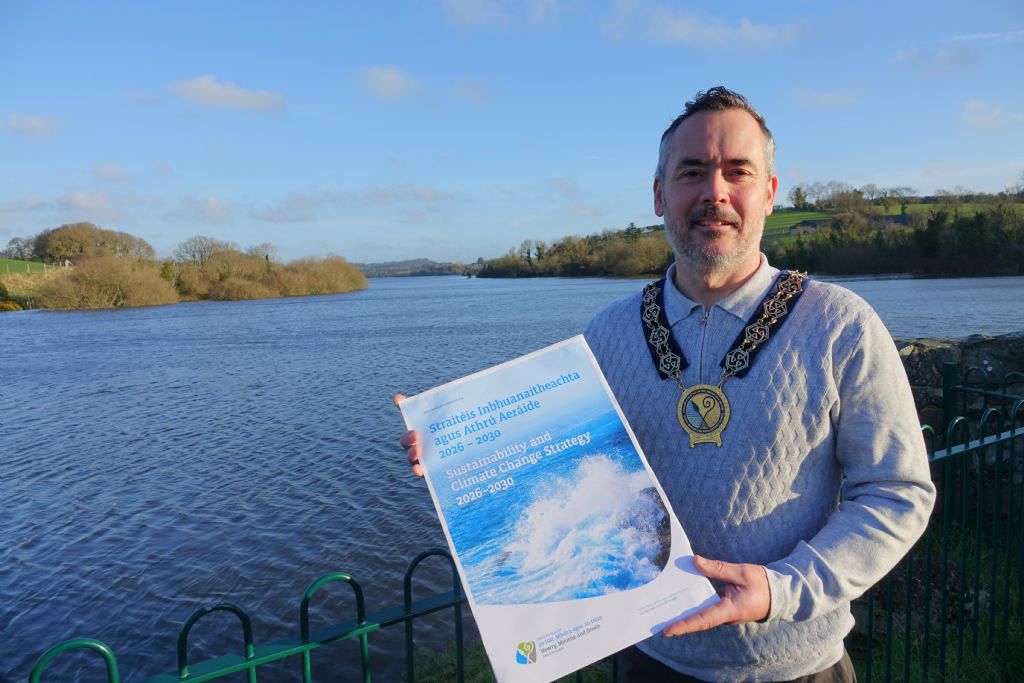
Newry, Mourne and Down District Council has released its first draft Sustainability and Climate Change Strategy 2026-2030 which will see the Council take action to reduce their impacts on Climate Change and guide the district towards achieving net zero status by 2050.
Launched last month, the public is being encouraged to have its say on the document which sets out areas for action on sustainability and climate change to help the district address the challenges it faces.
At the heart of the strategy is achieving a net zero, greener, healthier, sustainable district by 2050 where people, communities and businesses thrive and are resilient to the impacts of climate change.
Newry Mourne and Down District Council, Chairperson Councillor Philip Campbell, said “climate change is no longer a distant issue, it is happening here and now.”
Councillor Campbell added “the draft strategy represents an important step in how the Council responds as a district, reduces emissions, and prepares for a changing climate.”
“We are asking everyone to take part in this consultation so that together we can shape a greener, more resilient future for Newry, Mourne and Down and all work together to achieve a net zero district.”
Cllr Campbell said “the public has a role to play, helping the Council shape the decisions it makes in the years ahead to help address climate change.”
“This is a strategy for the entire district to make positive changes. Everyone’s voice matters to shape the changes we make for the years ahead,” the Chairperson added.
The comprehensive strategy is open to public consultation until Friday 13 March and sets out the Council’s vision for a low-carbon future, outlining how sustainability will be embedded across all Council operations and services.
The draft strategy also highlights the vital role local people and organisations will play in driving district-wide climate action to protect the area’s fragile environment and the benefits it provides for residents, visitors and current and future generations.
The draft strategy looks at how the Council will act to reduce its carbon emissions, its impact on climate change and meet its requirements under the Climate Change Act (NI) 2022.
The document highlights the need to work in partnership with others to take positive action to reduce emissions and impacts on climate change to ensure the district becomes a resilient and thriving zero carbon district and region.
The draft strategy aims to achieve a 50% reduction in the Council’s Scope 1 and Scope 2 emissions by 2040 – the carbon emissions from how it heats and cools its buildings and fuels its Fleet. It also aims to measure and reduce its Scope 3 emissions by engaging with 80% of its supply chain by 2035.
This includes actions to fully decarbonise the Council’s smaller fleet vehicles to 100% electric or zero emission vehicles by 2035.
In addition, it aims to fully decarbonise the Council’s entire fleet, including medium and heavy lorries by 2050, and increase recycling rates to 70% by 2050. Other key aspects of the draft strategy include focusing on energy efficiency and retrofitting buildings, investing in renewables and promoting and developing active travel.
The draft strategy seeks to align climate action and other key strategies including the Council’s biodiversity strategy, tourism strategy, Area of Outstanding Natural Beauty management plans and its 10-year masterplan for the UNESCO Global Geopark.
The Council has already taken steps to embed sustainability into its Corporate and Community Plans as a way of future-proofing its operations against regulatory changes, ratepayer expectations and future risk.
There are also proposals to engage with the community, businesses and schools to encourage climate action, provide strategic leadership on climate action across the district and cross-border co-operation with Louth County Council to develop a net zero region.
The draft strategy commits the Council to integrating climate action and sustainability in all aspects of its operations, decision-making and policies, and recognises that delivering the proposed strategy will require significant additional resources over its lifetime. Government funding is also highlighted as a key driver and enabler for Climate Action to ensure a ‘Fair Transition’ to Net Zero which does not lead to an unfair burden on Councils or rate payers.
A business case approach will be used to develop specific projects and investments linked to actions, looking at costs, carbon, energy and cost savings, return on investment and payback periods.
To take part in the consultation visit www.newrymournedown.org/consultations and for further information or to request consultation documentation, contact besustainable@nmandd.org or telephone 0330 137 4000.